
“[W]e might [therefore] say that perhaps the ONE is like us, that is, determined and determinable and yet undetermined and indeterminable. Always one ends up with paradoxes when knowledge reaches its limits. The ego knows it is part of [this] being, but only a part. The symbolic phenomenology of the unconscious makes it clear that although consciousness is accorded the status of spiritual kingship with all its attendant dangers, we cannot say what kind of king it will be. This depends on two factors: on the decision of the ego and the assent of the unconscious. Any dominant that does not have the approval of the one or the other proves to be unstable in the long run. We know how often in the course of history consciousness has subjected its highest and most central ideas to drastic revision and correction, but we know little or nothing about the archetypal process of change which, we may suppose have taken place in the unconscious over the millennia, even though such speculations have no firm foundation. Nevertheless the possibility remains that the unconscious may reveal itself in an unexpected way at any time…”
[But remember]: “the intimate essence of the universe is not of the same nature as our own consciousness.”
“Art does not reproduce the visible; rather it makes visible.”
“[And] you can, as you know, forcibly apply the ideals you regard as [correct] with an effort of the will, and can do so for a certain length of time and up to a certain point, that is until signs of fatigue appear and the original enthusiasm wanes. Then free-will becomes a cramp of the will, and the life that has been suppressed forces its way into the open through all the cracks. That, unfortunately, is the lot of all merely rational [interpretations].”
“It is [merely]…lack and lacuna that are created”; “a debacle of the intellect.’’
“Consciousness originated in the nostalgia of the universe for an audience”; “therefore you stand only in abject servitude to your perceptive consciousness…[until you realize] “dogma is bluff based on upon ignorance.”
“You cannot restrict the mind’s capacity”; [Tip! remember] “the thing hidden is always more or less irrelevant, for in itself it is no more than an image or sign pointing to a content that cannot be defined closely.”
In other words: “That which is a stone to the ordinary man is a pearl to [those] who know”
or
“[m]eaning, [therefore] is ultimately a matter of adjacent data.”
“Strive diligently”, but be forewarned: “doe not call up any that you can not put downe.”
{‘“The Author has not given his effort here the benefit of knowing whether it is history, autobiography, gazetteer, or fantasy,’ said the New York Globe in 1851 about Moby-Dick.”}
the pinched: Graham Greene, Paul Klee, Ezra Pound, Mina Loy, C.G. Jung, John D’agata, H.P. Lovecraft.
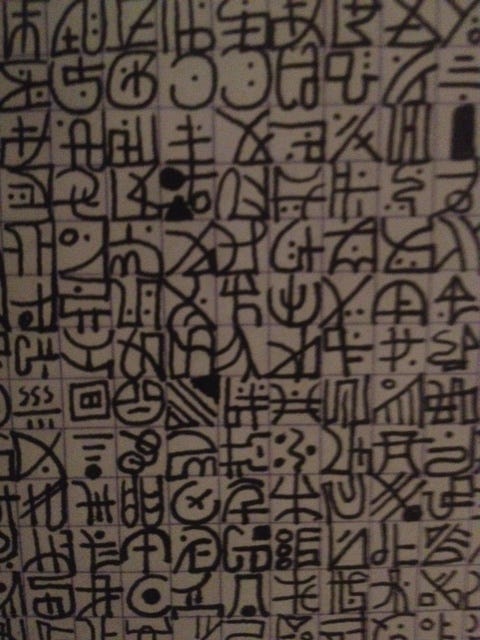
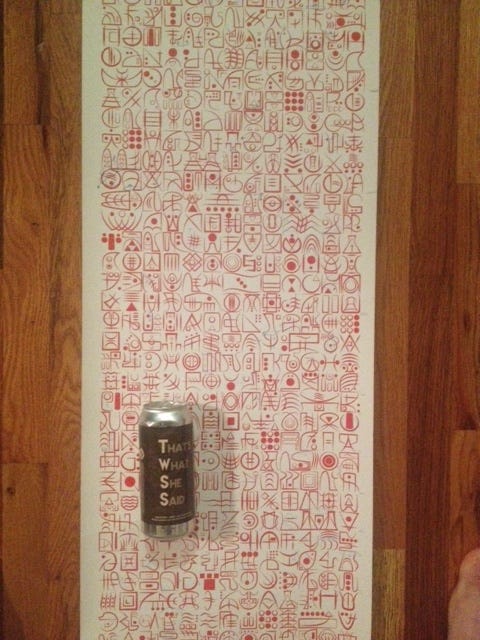
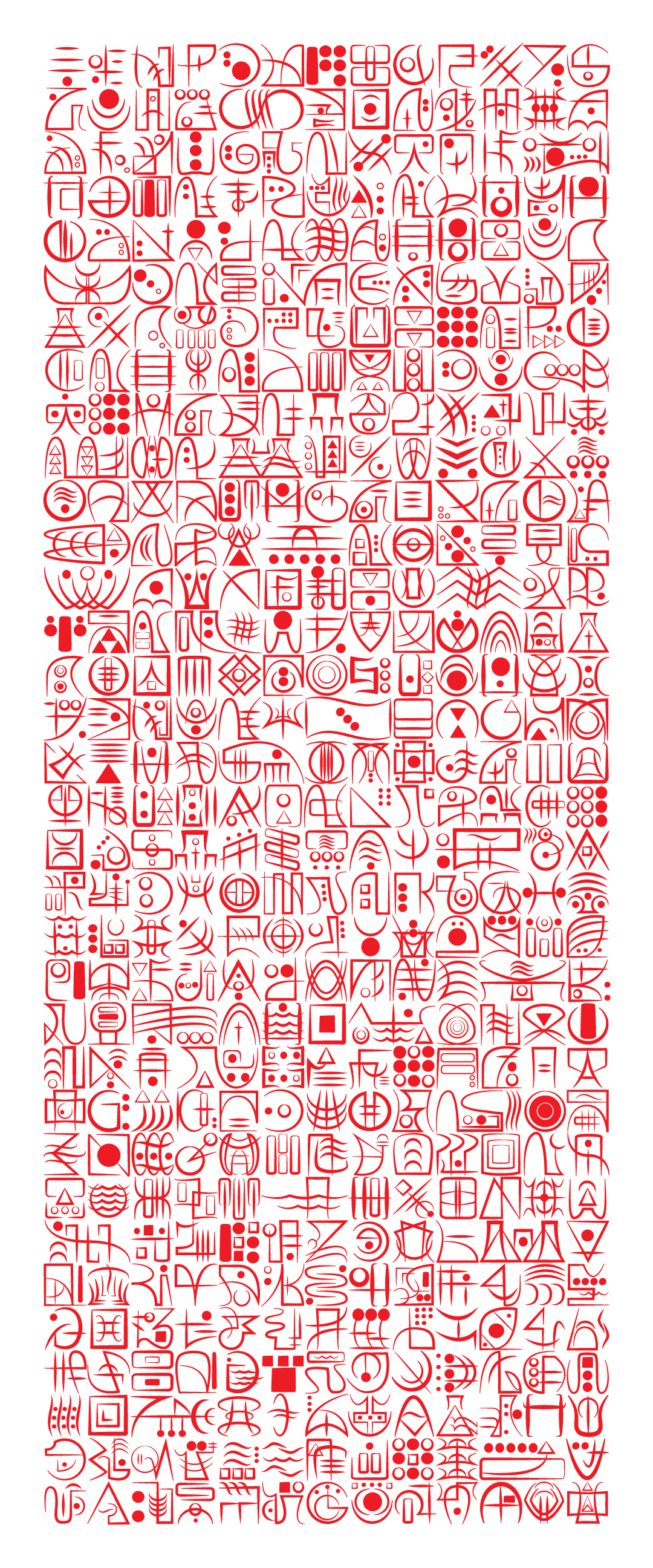
That beer can is just for scale; do not drink beer whilst conjuring demons.
(more prints will be available soon-ish; contact us for more information.)